With the Name of the Gracious and Compassionate
Creator of the Heavens and the Earth
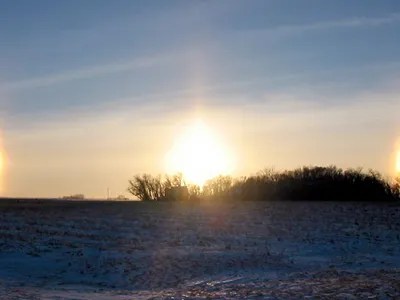
Ash-shams (the sun) is gramatically feminine.
Suurat-ash-Shams (the suurah entitled “The Sun”) begins with these two aayaat:
وَٱلشَّمْسِ وَضُحَىٰهَا
وَٱلْقَمَرِ إِذَا تَلَىٰهَا
wash–shamsi wa-duhaahaa
wal-qamari idhaa talaahaa
I copied the following translations from https://legacy.quran.com/91 and from https://quran.com/91, except for the last, which is my version.
You may notice that not one of the translations respects the fact that in Arabic the sun (ash-shams) is grammatically feminine (“unthaa”) and the moon (al-qamar) is grammatically masculine (“dhakar”). Not only is Allah perfectly capable of expressing himself clearly, but he is also the creator of the entire vastness of the cosmos and of the Arabic language itself. Allah could have made the sun masculine and the moon feminine, or made either or both of them conform to one of the 16 different grammatical singular forms as required in Fula, the language of the Fulani people (spoken from Senegal to the Central African Republic, and thousands of years old).
You may notice that in the one Spanish translation included here, the sun (el sol) is masculine and the moon (la luna) is feminine. This is in conformity with the Spanish language. This also shows why the Qur’an cannot be translated. Changing the language changes the meaning.
There is no word corresponding to “it” in the Arabic of the Qur’an. In English, we use “it” to refer to virtually all of the vast trillions upon trillions of entities and events in the vastness of the cosmos – reserving “he/him/his” and “she/her/her” for humans and other vertebrate life-forms on Earth (which constitute a tiny minority of the multitude of living creatures on this planet). For English speakers, virtually everything is “it”, but in the Qur’an, absolutely everything is “he” (“huwa”) or “she” (“hiya”). Fundamentally different concept of reality.
Finally – and crucially – you may notice that a couple of the translations use the expression “I swear by”. I believe this is similar to three of the Spanish translations I examined, which use the word “juro” – which I think means “I swear”. In actual fact, the usage of the particle “wa-“ in this context – “wash-shamsi” – has no counterpart in English. Imagine a language that has no such thing as a question. How would you explain what a question is? The grammatical form here has no counterpart in English. Therefore – it is impossible to translate. What we must do is immerse ourselves into the Arabic Qur’an – just as we did with our mother-tongue when we were an infant and young child. Accept our ignorance. Do not try to feel smart. We must be as humble and trusting as we were as an infant. Allah is worthy of our absolute trust. Surrender. That is what “islaam” means.
Sahih International:
By the sun and its brightness
And [by] the moon when it follows it
Muhsin Khan:
And by the sun and its brightness;
And by the moon as it follows it (the sun);
Pickthall:
By the sun and his brightness,
And the moon when she followeth him,
Yusuf Ali:
By the Sun and his (glorious) splendour;
By the Moon as she follows him;
Shakir:
I swear by the sun and its brilliance,
And the moon when it follows the sun,
Dr. Ghali:
And (by) the sun and its forenoon radiance,
And (by) the moon when it ensues it.
Dr. Mustafa Khattab, the Clear Quran:
By the sun and its brightness,
and the moon as it follows it,
Fadel Soliman, Bridges’ translation:
By the sun and its morning shine,
and the moon as it follows her,
Maarif-ul-Quran:
I swear by the sun and his broad light,
and by the moon when she follows him,
Muhammad Taqi-ud-Din al-Hilali & Muhammad Muhsin Khan:
By the sun and its brightness.
By the moon as it follows it (the sun).
Mufti Taqi Usmani:
I swear by the sun and his broad light,
and by the moon when she follows him,
Ruwwad Center
By the sun and its brightness,
and by the moon as it follows it,
Muhammad Hijab:
By the Sun and its radiance,
and the moon as it trails after it,
Abridged Explanation of the Quran:
Allah takes an oath on the sun and its rising after breaking onto the eastern horizon.
He also takes an oath on the moon when it follows the sun after it has set.
Tafheem-ul-Quran – Abul Ala Maududi:
By the sun and its heat and brightness,
and by the moon as it follows it;
Julio Cortes:
¡Por el sol y su claridad!
¡Por la luna cuando le sigue!
Lester A. Knibbs:
By the sun and her brightness,
and by the moon as he follows her,
Conclusion
You may notice that my version is simple and conforms to the gender of the original language. I am astonished that not one of 15 versions — the work of at least and perhaps over 20 scholars (‘ulamaa’) — not one conforms to the gender of the original language, the words of Allah. Laa ilaaha ill-Allah! These are not holy creatures. They are ordinary men and women, just as you and I are ordinary men and women. And, just as we can be mistaken, so can they. Allah requires us to think. And Allah alone is always right.
Allah willing (in shaa’-Allah), I may share more thoughts. For example, the clumsiness of “it follows it” compared to the simple elegance of Allah’s original language.
Lester A. Knibbs
1 Rajab 1443 / 2 Rajab 1443
February 2, 2022 / February 3, 2022

