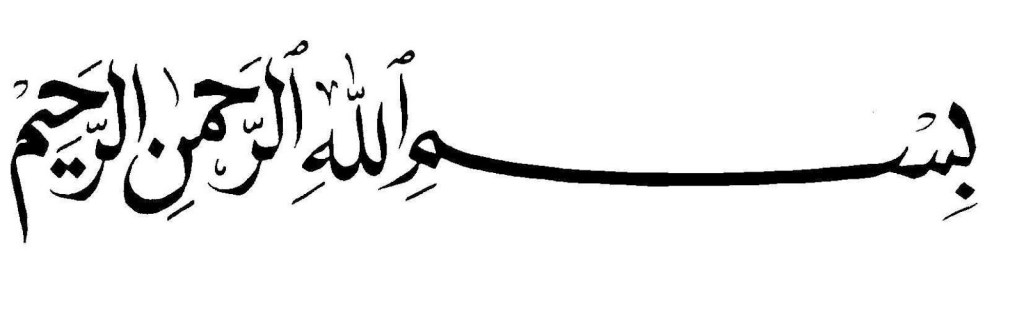
In the Spirit of the Gracious and Compassionate
Creator of the Heavens and the Earth
In 1415, when Portuguese forces seized the little peninsula, known as Ceuta, on the north coast of Morocco, the Portuguese did not see themselves as pursuing “white power”, they saw themselves as extending Christian power. Crossing over the Straits of Gibraltar meant continuing the Reconquista — the struggle on the part of Spanish Christian monarchs to regain the Spanish peninsula from Muslim rule. This was the continuation of the struggle between the Christian powers of Europe and the Muslim powers of Africa and Asia — a struggle that had begun over 700 years earlier.
In the Abyssinian-Adal War of 1529-1543, Portugal allied itself with Abyssinia and the Ottoman Empire allied itself with the Sultanate of Adal, a small but powerful state located where Somalia and Djibouti meet the Red Sea and the Indian Ocean. This was a major conflict, a war pitting two Christian powers — Abyssinia and Portugal, one African and the other European — against two Muslim powers — the Sultanate of Adal and the Ottoman Empire, one African and the other Asian and European. The Ottoman Empire aided Adal with Albanian troops from Europe. This was not a war of White against Black. It was a war of Christian against Muslim.
In the 17th and 18th centuries, Europe experienced what is called the Age of Enlightenment. A major result of this transformation of European thinking is that Europe saw itself more in ethnic and racial terms than in religious terms. I prefer to call this period the Age of Enwhitenment. Europeans became white people. Ever since then, the global struggle that led to the eventual European conquest of the world became a struggle for white supremacy.
At the Berlin Conference of 1884-1885, the European powers divided the map of Africa among themselves. Italy took on the task of conquering Abyssinia (since then known as Ethiopia). At the Battle of Adwa in March of 1896, the Italians were resoundingly defeated by the Ethiopians. Italy was the only European power to be completely rebuffed by an African nation.
The second war between Italy and Ethiopia began in January 1935 and ended in May 1936 with the complete Italian military occupation of Ethiopia. In January of 1941, the Ethiopian emperor Haile Selassie returned to his country, and with some British aid, fought and ended the Italian occupation by May of that year. In 1947, in the peace treaties bringing World War II to an end, Italy recognized Ethiopian independence.
In the 16th century, a European nation — Portugal — fought side-by-side with an African empire — Abyssinia (Ethiopia) — as two Christian nations standing against two Muslim powers — the Ottoman Empire and the Sultanate of Adal. Christian against Muslim.
In the 19th and 20th centuries, a different European nation — Italy — fought against Abyssinia. This time — coming after the Enwhitenment — it was White against Black.
In the white supremacist manifesto, The Rising Tide of Color, the author, Lothrop Stoddard, emphasizes the importance of keeping Black and Muslim separate. In the old Tarzan movies, the good white people found themselves pitted against violent and confused Black savages who were being manipulated and controlled by clever light-skinned men in turbans — by implication, Arab Muslims. This worldview is particularly relevant today, as self-described white supremacists pit themselves against both Black people and Muslims.
Whether you like it or not, you are living on a battlefield, in the middle of a war. Your life and your mind are territories and resources to be employed, destroyed, neutralized, or used against you. All of the instruments of culture, so-called “entertainment”, education, religion, news and information, and institutions of economics and government are engaged in this war. All of the media are engaged in this war. There is no neutrality, no breaking even. You can only win or lose.
Gird up your loins.
11 Rabee’-ul-Awwaal, 1440
November 19, 2018
 Which Way Is Up?