With the Name of the Gracious and Compassionate
Creator of the Heavens and the Earth
This story goes along with a track on my CD of piano improvisations, Inner Voices. The CD is available through my web site (doctorhakeem.com) or from eBay. The title of the track is the same, “charger”. I suggest that you listen to track 11 (“cumulonimbus weather”) and track 12 together.
http://www.lesterknibbs.com/11_cumulonimbus_weather.wma
http://www.lesterknibbs.com/12_charger.wma
They are a two-movement sonata. The first movement, cumulonimbus weather, represents some of the weather encountered by the charger of the story on its homeward journey. The titles and this story were thought of after the improvisations were made. I preferred to just number them (one through nineteen), but a good friend advised me to name them and helped me to choose the names. The improvisations were recorded in 1997 and the CD was released in 1998. My style of free improvisation is influenced by the later works of John Coltrane, and has been compared to the avant-garde work of composer-pianist Cecil Taylor.
It is the end of the World
The invaders are victorious. The mighty army of Kanem-Bornu, combined with its allies and many great heroes and surviving veterans of the great wars to the west – this mighty and determined army has been crushed.
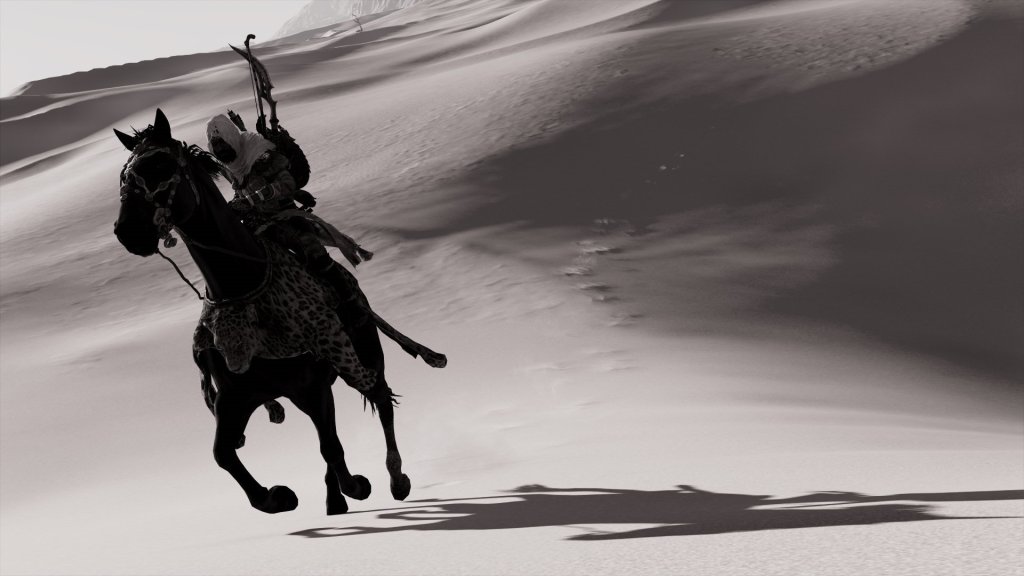
The Ruling Council must be warned, and fast. Despite his wounds, the Warrior manages to mount his charger, shake the reins and mutter, “Home! Home!” The sleek, jet black war-horse understands and bursts forward, swift as lightning. Strong and brave, the animal carries its wounded, half-conscious burden toward the appointed destination.
Forward, across hot sands under the blazing sun. Forward, over rocky heights and through narrow passes. Forward, through brushlands and across grassy vales. The loyal war-horse carries its burden at maximum speed.
The sun sets, and onward rushes the horse. Rain falls, but even thunder and lightning do not deter this charger from its forward progress.
Finally, in the distance, the charger sees its goal.
In the dim light of early dawn, the mu’adhdhin is finishing the adhaan. “Allaahu akbar. Allaahu akbar. Laa ilaaha illal-Laah.” On the distant eastern horizon, the tiny figure of a horse and its rider appears. “It’s Fadlallaah!” someone cries out. “I know his horse.”
Immediately, the men go for their armor. These are the ones too old, too young, wounded or sick, who could not go to the distant battle. They know that Fadlallaah would not leave the scene of battle, even if his life depended on it, unless the whole country was in immediate danger. These men will perform the dawn salaah in full armor.
The horse and its rider finally reach the city. Women, humming and chanting prayers for mercy, come to remove the Warrior from his mount. Battered and bruised, everywhere clotted with blood – his helmet and his armor, his face, arms, hands, even his legs and feet – yet he is conscious. “Must tell them. Must tell them.” But everyone already knows.
The members of the Ruling Counsel had come out for the dawn salaah. Seeing Fadlallaah, they mumble among themselves: “All is lost. The invaders cannot be stopped. It is the End of the World.”
After salaah, they will decide what must be done.
Suddenly, a shrill cry pierces the air. The powerful horse, its mission complete, rears up, paws the air in futile agony, and collapses to the ground.
The charger is dead.
1998
 Which Way Is Up?